
 EN
EN  ZH
ZH 

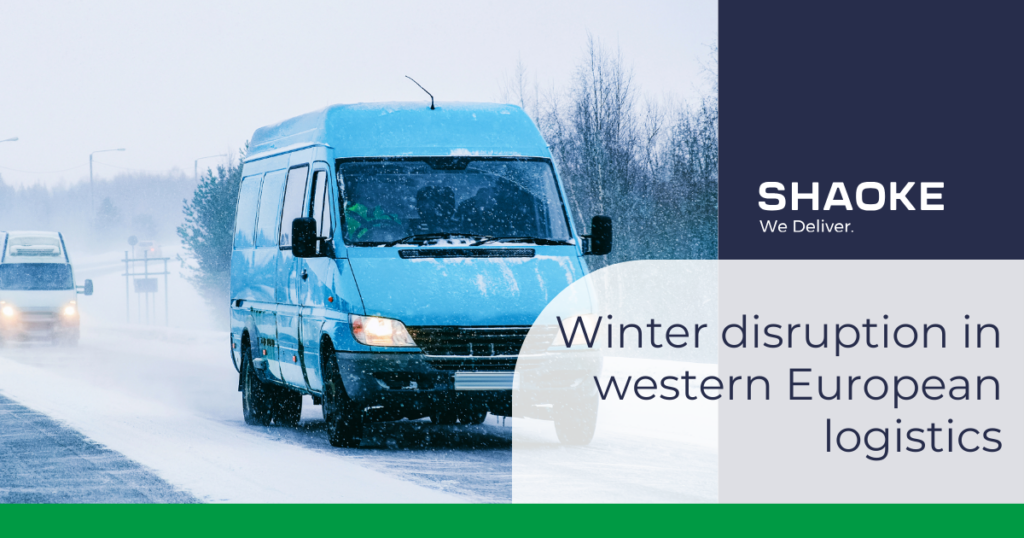
Winter weather puts pressure on logistics networks in western Europe
In early January 2026, heavy snowfall and freezing conditions across northwest Europe significantly disrupted transport networks. In the Netherlands and France, airports cancelled hundreds of flights due to snow and ice, stranding passengers and grounding cargo capacity – Schiphol alone saw over 2,500 flight cancellations in five days, roughly half of scheduled operations at times. Aviation carriers reported shortages of de-icing fluid, with KLM using about 85,000 litres daily to keep aircraft operable and still cancelling hundreds of flights due to supply constraints.
Road and rail face similar pressures
Snow and ice are also slowing road freight and rail services. Major roads in northern France implemented bans on heavy goods vehicles in some regions, forcing trucks to stop and causing delays for inter-city deliveries. Inland transport suffers from traffic congestion and icy conditions, reducing productivity at key terminals such as Rotterdam and Hamburg. Rail services are vulnerable too: frozen switches and tightly-scheduled networks mean even small weather impacts rapidly cascade into wider delays, particularly in dense systems like the Dutch rail network.
Operational effects cascade through supply chains
When key links slow down, pressure spreads downstream. Snow and sub-zero temperatures at ports reduce yard productivity, slow handling operations and lead to longer dwell times for containers and trailers. Winter conditions also increase risk for ground operations, from hazardous loading docks to slowed last-mile deliveries. The effect is visible in delivery windows slipping, higher dwell times at depots and added congestion throughout the network.
Planning and response matter Logistics planners mitigate winter disruption with proactive strategies. Forecast-based planning helps adjust routes before conditions worsen. Diversifying transport options and buffer capacity (for example, having alternative carriers or network nodes ready) reduces dependency on a single route or mode when weather hits. Clear communication with customers and partners about expected delays, revised schedules, and safety protocols also keeps operations coordinated during events. Historical analysis of past storms shows that buffer stock and flexible routing can prevent total stoppages even when weather worsens.
Practical steps for winter readiness
- Build buffer time into schedules for weather risk.
- Use real-time weather forecasting and alerts to adjust plans early.
- Keep additional supplies (like de-icing fluid and snow clearing equipment) on hand.
- Diversify transport modes and routes where possible.
- Communicate proactively with clients and partners about delays and revised timelines.
Sources • Winter weather impact from northwestern Europe early 2026 (cancellations, de-icing pressures) – Reuters/The Guardian/Business Insider.
• Terminal and inland transport disruption due to snow and ice – Maersk advisory.
• Rail and dense network vulnerability to winter snow – analysis of Dutch rail conditions.
• Port and landside logistics delays from cold weather – Kuehne+Nagel update.
• Winter logistics planning and supply chain strategies.